Equipment
The wall is the room's biggest fixture
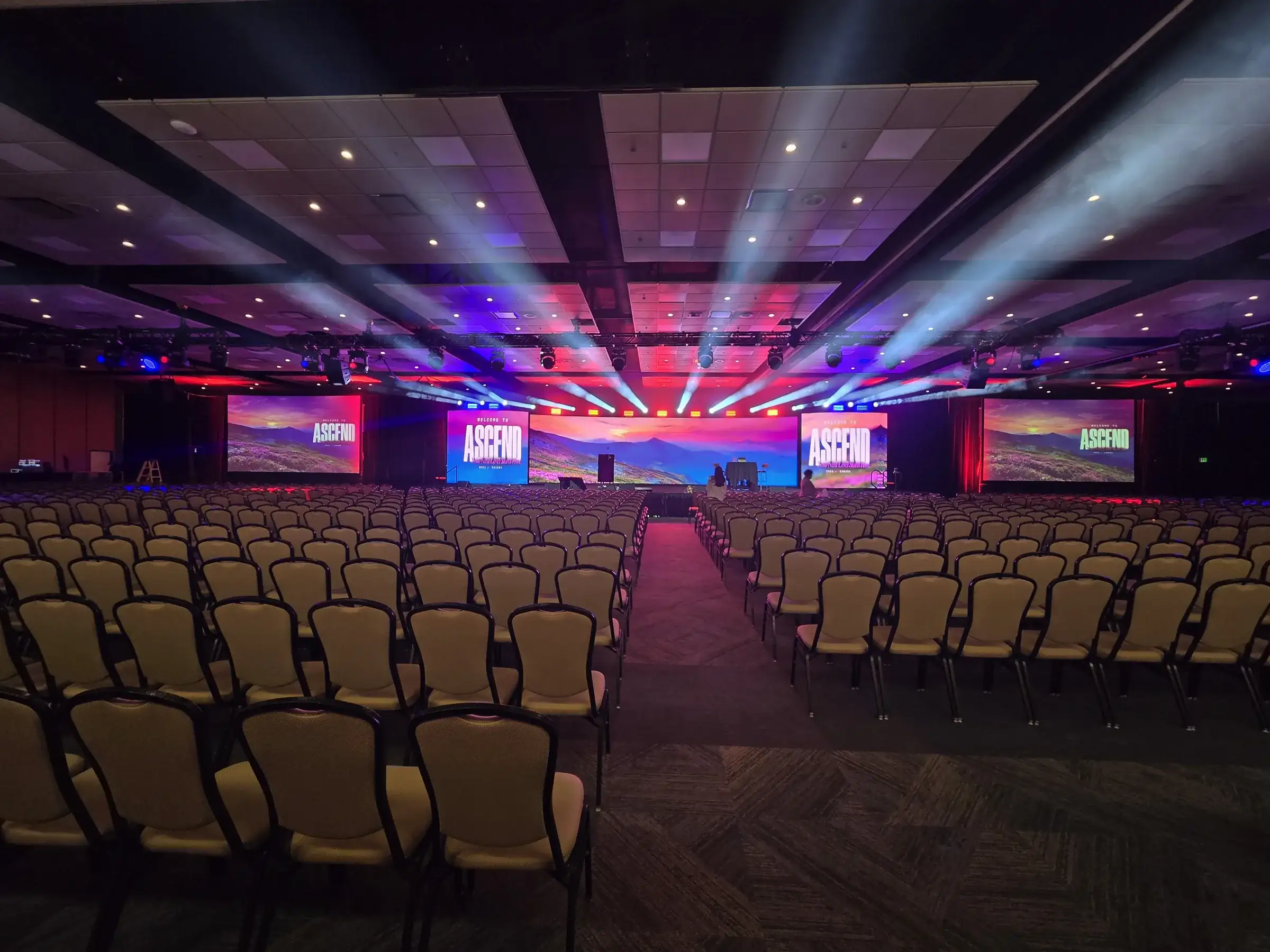
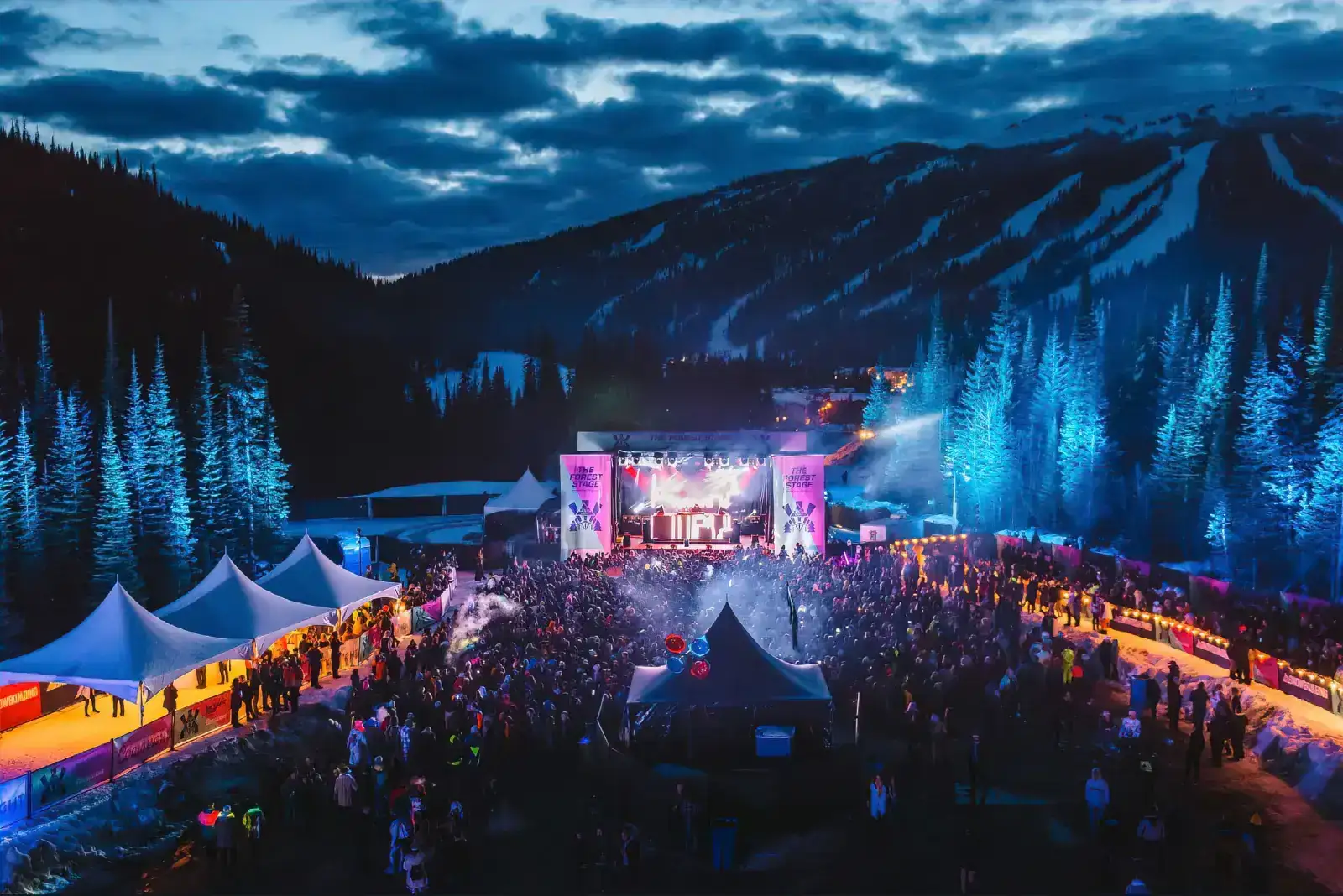
A wall built for a trade show aisle, where the closest viewer stands three feet away, needs a finer pitch than a wall built for a festival field where the closest viewer stands thirty. SW owns LED in five pitches, from 2.6 mm fine pitch to 10 mm outdoor, with the processing that drives it, the ground support that stands it up where there is no rigging, and mobile LED trailers for the sites that have nothing to hang from at all. Held in Vancouver, Kelowna, and Victoria.
01 / Wall panels, by pitch
Five pitches. Named product, not a placeholder spec.
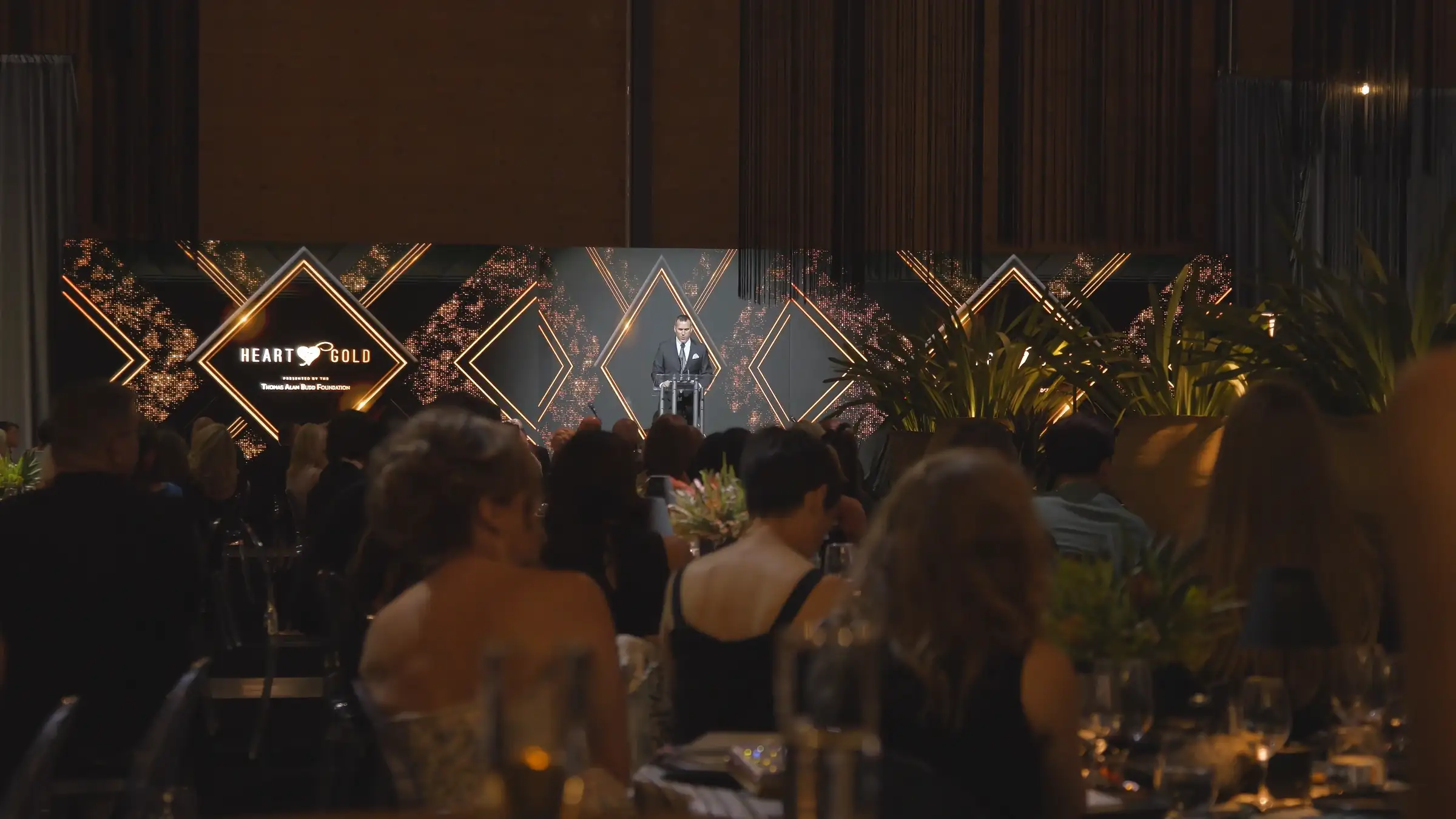
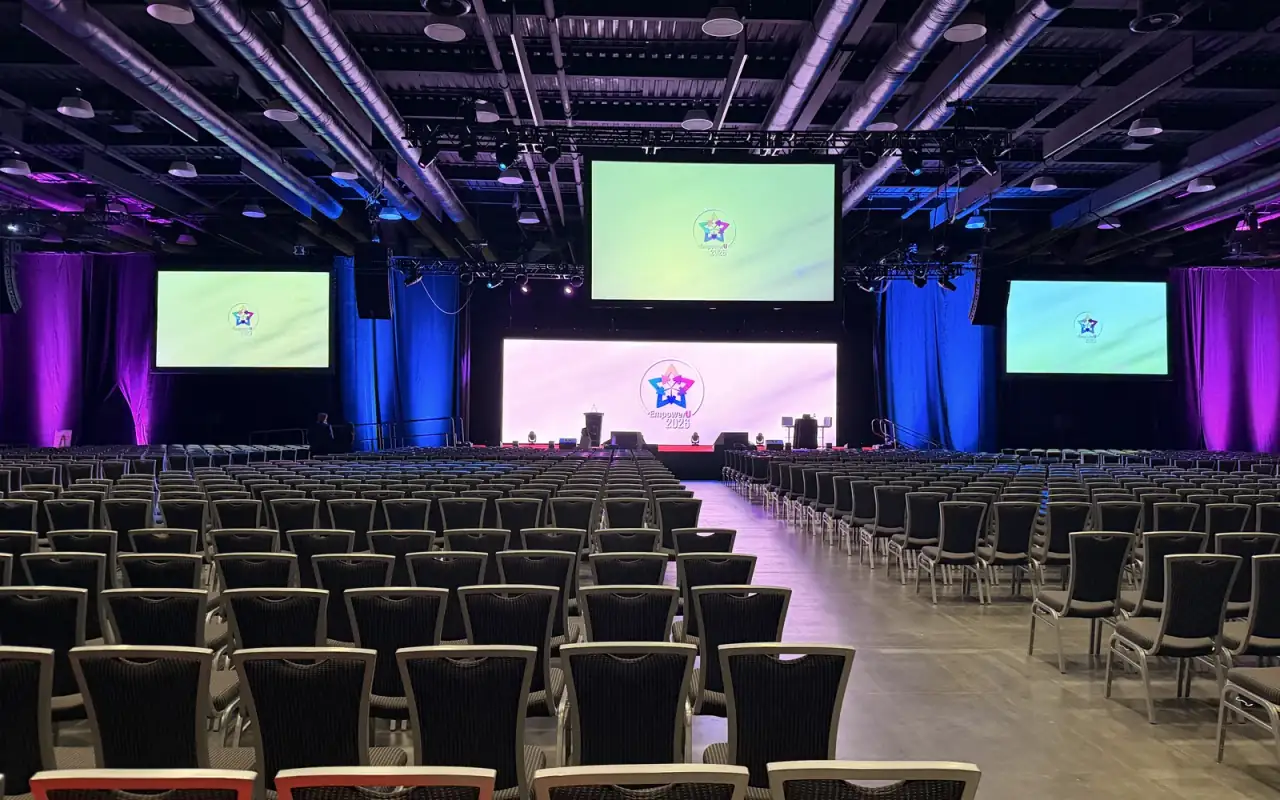
Pitch is a viewing-distance decision, not a budget line. Get it wrong in one direction and the client pays for resolution nobody sees; get it wrong in the other and the wall pixelates the moment it matters most, the keynote's opening slide, the product reveal, the downbeat. SW's LED inventory runs five pitches, each a named product, so the wall gets specified to the room rather than to whatever happened to be in the truck. MG10 at 2.6 mm is the fine-pitch product for close-viewing indoor walls, with round-corner MG13 panels new in 2025 for curved fine-pitch builds. MG7S Pro at 3 mm and Unilumin at 3.9 mm cover the mid-format indoor walls most conference main stages and gala backdrops actually run, and the Unilumin corner panels turn a flat wall into a wrap. MG7 and MG5 at 5.9 mm take the larger walls and outdoor use where viewing distance opens up. TPad at 10 mm is for the largest outdoor builds and the longest viewing distances, festival fields and stadium-adjacent sites.
Wall panels
MG10 2.6 mm
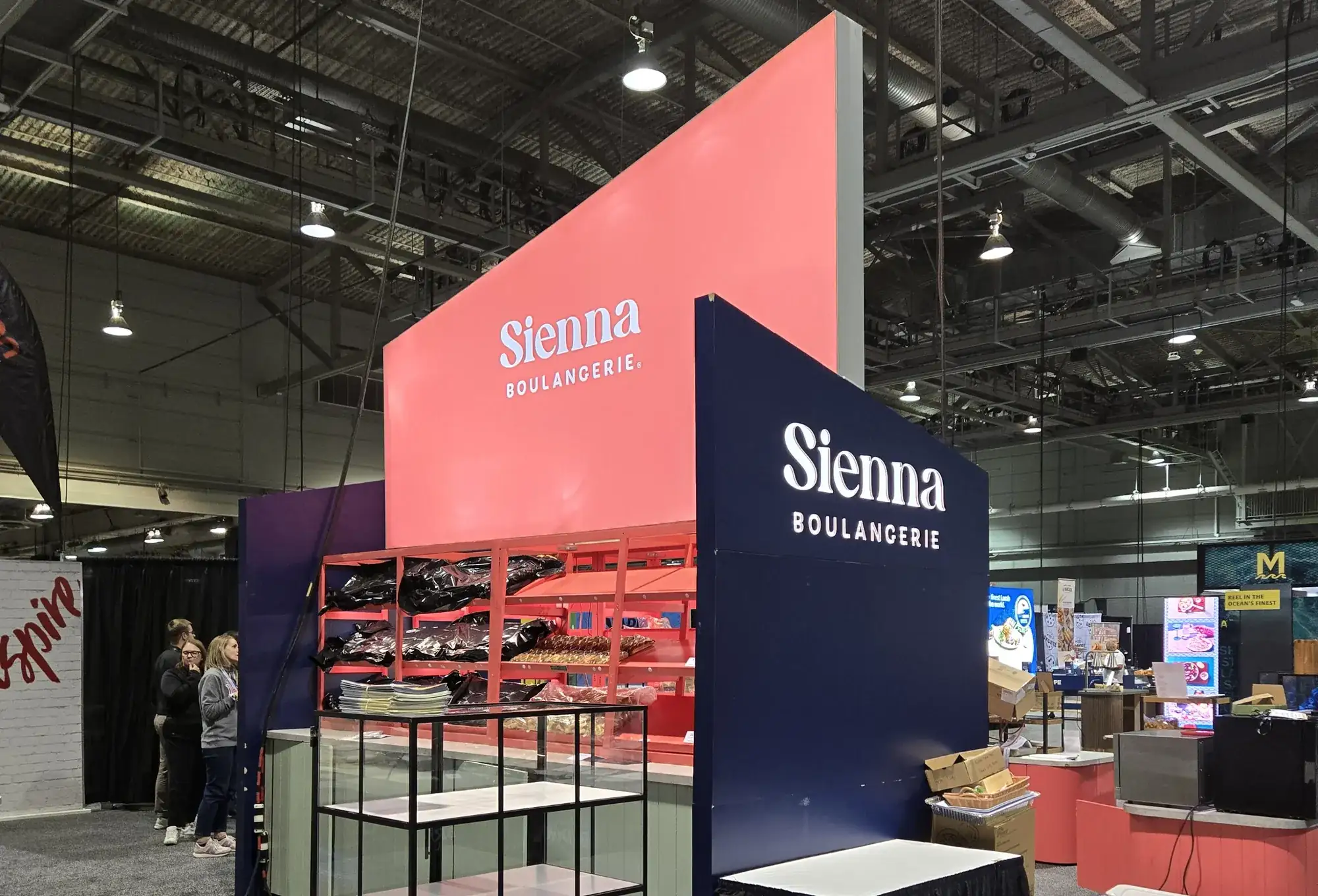
Fine-pitch indoor panel for close viewing: trade show booths, small conference stages
Newest in the fleet with MG7S Pro
MG13 2.6 mm round-corner panels
Curved corners for fine-pitch builds, left and right, up and down
New 2025
MG7S Pro 3 mm
Mid-format indoor panel, the size most keynote walls run
2020, newest in the fleet with MG10
Unilumin 3.9 mm
Mid-format indoor panel, with corner panels for wraps and curves
Mixed
MG7 5.9 mm high contrast
Larger indoor walls and outdoor use
2020
MG5 5.9 mm
Larger walls and outdoor use
2016
TPad 10 mm
Outdoor panel for the largest builds and the longest viewing distances
2013
Where a surface is too large or too irregular for a panel wall, the same team runs projection instead: Christie D20HD-HS 20K and Panasonic 5K laser projection on the projection page.
02 / Processing and playback
The wall is only as good as what feeds it
A panel wall is a surface. What makes it a screen is the processor that maps pixels to panels, the controller that holds calibration and colour across the whole face, and the playback that puts the right content on it at the right second. SW carries the NovaStar controller family across its bases, from the MCTRL series for straightforward walls through the VX all-in-one processors and the MX40 for the larger and more complex builds, with a J6 splicing processor for multi-surface layouts, CVT fibre extenders new in 2025 for the long runs an outdoor site forces, and TB series media players for standalone content. VDWall processors and the TPad control units and splitters serve their own walls. Show control runs through grandMA2, grandMA3, and ChamSys, and switching between sources, slides, camera feeds, video, and sponsor loops, runs through the same video chain SW uses on its broadcast work.
Controllers and processors
NovaStar MCTRL4K
4K LED controller, with an extender
2020
NovaStar MCTRL-660 Pro
LED controller
Mixed to 2025
NovaStar MCTRL660
LED controller
Owned
NovaStar MCTRL300
LED controller for smaller walls
2016
NovaStar MX40
Processor for large-format builds
Owned
NovaStar VX2000 Pro
All-in-one video processor and controller
Owned
NovaStar VX400
All-in-one video processor and controller
2023
NovaStar NovaPro HD
Video processor
Mixed to 2023
NovaStar J6
Multi-screen splicing processor for multi-surface layouts
2018
NovaStar CVT-10S
Fibre extenders for long signal runs
New 2025
Playback and the other walls' processing
NovaStar TB50
Multimedia player for standalone content
New 2024
NovaStar TB8
Multimedia player for standalone content
2020
VDWall LVP605
HD video processors
2016
TPad 10 control units
Control for the TPad walls
2013
TPad 10 signal splitters
Signal distribution for the TPad walls
2013
The reason the processing is listed at all: on a wall, the failure a client sees is almost never a dead panel. It is a colour step between two panel batches, a frame of tearing on a camera cut, or a signal drop on a long run. Those are processing and cabling problems, and they are solved in the warehouse before the truck leaves.
03 / Ground support, rigging, and power
Hung from house rigging, ground-stacked, or on its own frame
Inside a venue the wall hangs from house rigging or ground-support truss and patches into the room's power and signal. On a site with nothing overhead, it stands on its own frame. SW carries the Unilumin ground-support system for that: double and triple back frames, skis, bracing pipe, clamps, and the ground and rigging bars that let the same panels hang or stand. Yes Tech tile frames fill and square a build, TPad rigging hardware flies the outdoor walls, and a 200A three-phase LED wall distro puts the power where the wall is rather than where the venue happened to leave it.
Ground support, rigging, and power
Unilumin ground support
Double and triple back frames, skis, bracing pipe, clamps and bolts
Owned, Vancouver and Victoria
Unilumin ground and rigging bars
Bars that let the same panels hang from rigging or stand on the frame
Owned, Vancouver, Kelowna, and Victoria
Yes Tech tile frames
Empty frames to fill and square a build
2020
LED wall distro, 200A three-phase
Power distribution sized for a wall
Mixed
Unilumin cabling and Cat5
Shielded Ethercon and True1 runs at wall lengths
Owned
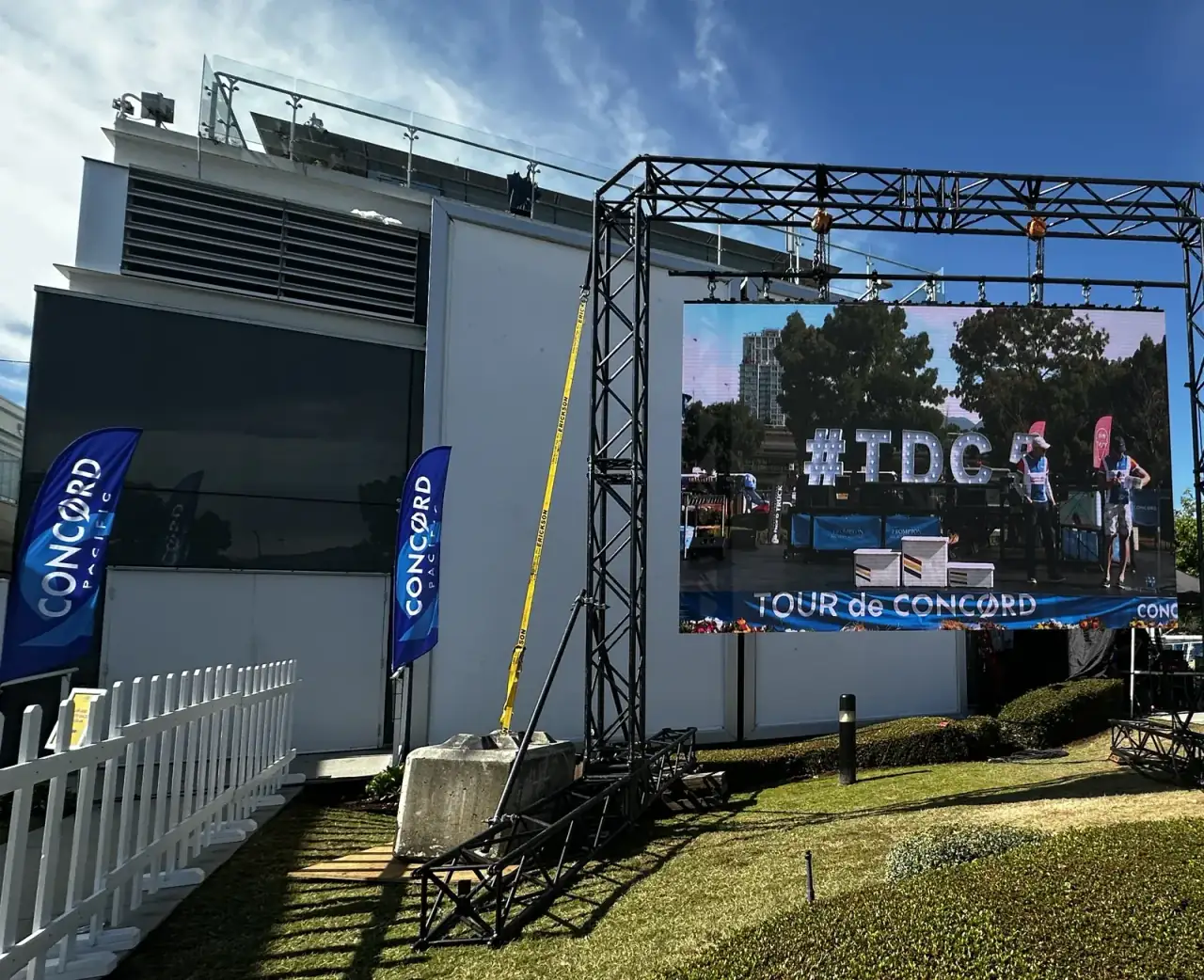
No house rigging on the site is the normal case for outdoor work, not the exception. An outdoor wall on False Creek in 2025 hung from its own goalpost truss, on shackles, with a ballast block and an outrigger leg holding the frame down. That is what the ground-support rows are for.
04 / Mobile LED trailers
For the sites with nothing to hang from
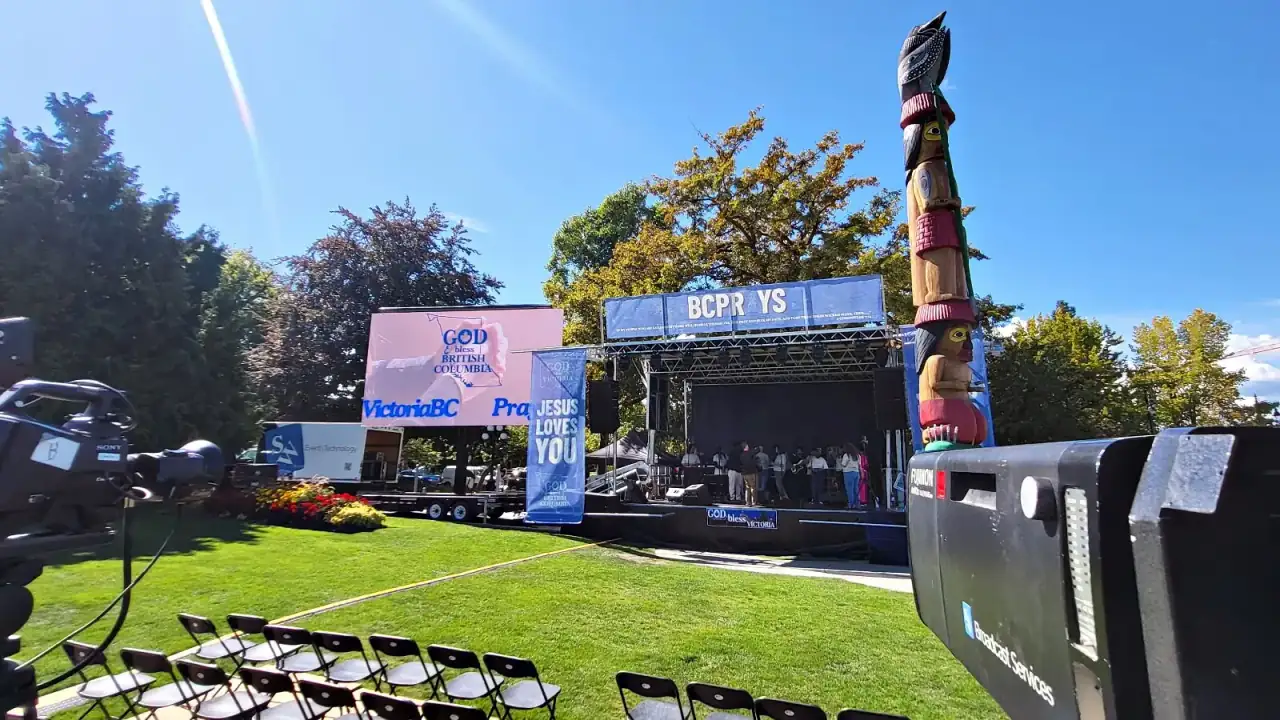
A single-day outdoor concert, a community festival, a parade route, a sports fan zone: sites with no venue wall, no covered rigging point, and a load-in window measured in hours. SW's mobile LED trailers are the answer built for exactly that job: an LED face on its own trailer, self-contained, towed to site and raised the same day, and outdoor-rated for the deployment. They are held in Vancouver and Kelowna, and they are what "trailers" in this page's name means.
Mobile LED trailers
Mobile LED trailer
Trailer-mounted outdoor LED wall, self-contained, towed to site
Owned
The trailer is towed; what pulls it is not part of this page. Where the wall is bigger than a trailer face, the ground-support system in the section above builds it on the ground beside the stage.
05 / The people on the wall
We spec the pitch, build it, and keep it lit for every show it runs
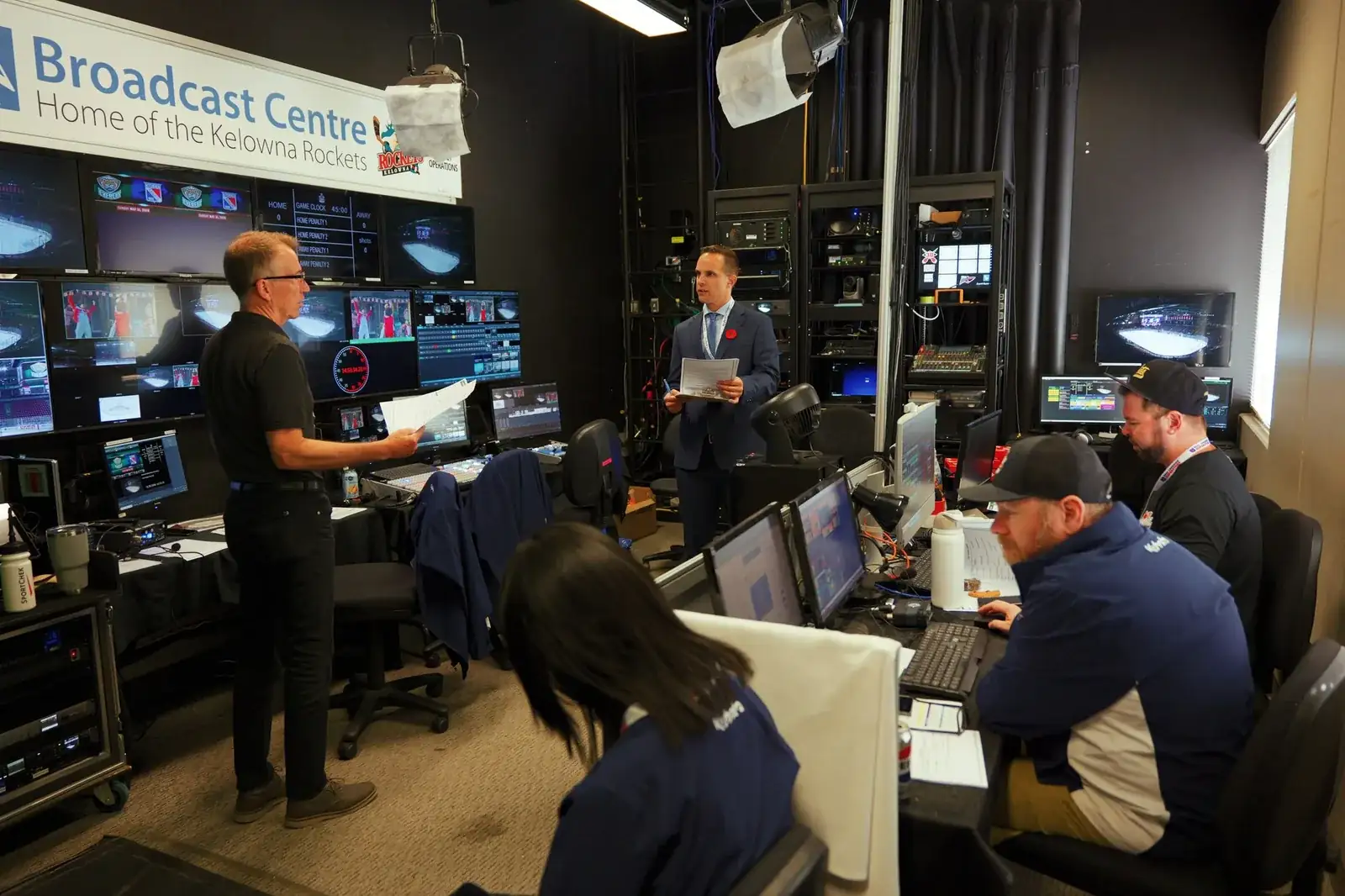
A wall does not calibrate itself, and a processor is only as good as the person who mapped it. SW crews the wall: the technical lead who specifies pitch, panel count, and aspect ratio against the actual viewing distance; the LED technicians who build it, dry-test it in the warehouse before it ships, and colour-match it as one surface on site; the media server and switching operator who runs the sources through the show; and the riggers who hang it or stand it up. The wall is built and tested before it leaves, so panel faults surface in the warehouse, not on site.
The crew is drawn from the same bases the panels are: Vancouver, Kelowna, Victoria, and Regina, with satellite operations beyond them. On a multi-day show the crew stays through the run, handling source switching, reloads between sessions, and any panel service the show requires, and the technical lead named in your proposal is the technical lead on the floor.
Where your own production team carries the content and the show, SW builds the wall and runs the screen it plays on. The client owns the content, the brand, and the show. We own the surface.
06 / Content and the look
When the wall needs something to show
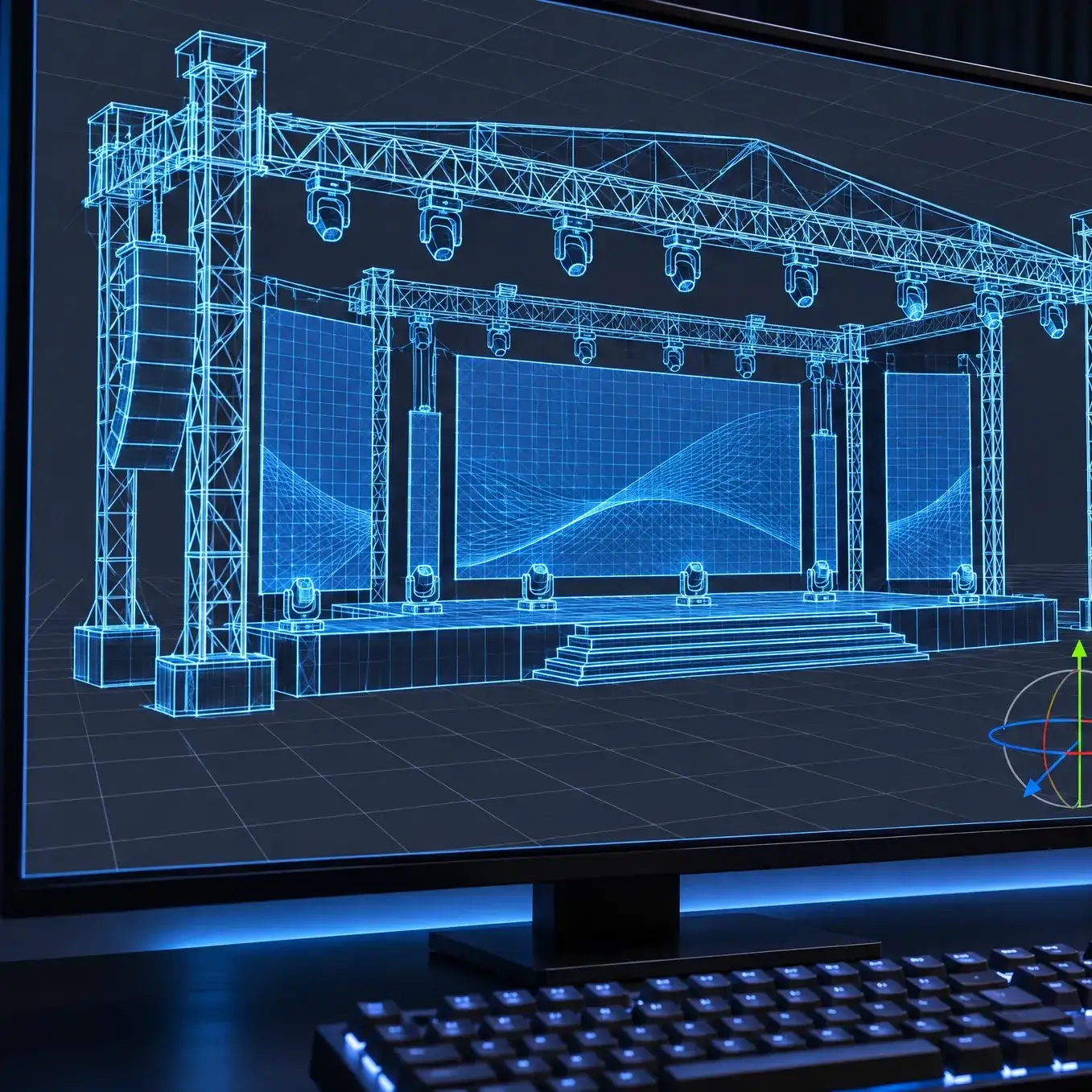
The panels, the processing, and the crew put a surface in the room. What plays on it is the client's, and most clients arrive with it: a keynote deck, a product reel, show graphics, brand assets. When the content does not exist yet, or when the wall is part of a show look that has to be designed rather than assembled, SW's design bench takes it on: content built to the wall's pixel map, show design that sets the wall against the lighting and the scenic, and the stage look drawn before the gear ships. That is a service, run on lead time, and it has its own pages. Arena perimeter and rink board LED is a different product with its own page: SW owns the frame system that carries it and specifies the display per building.
07 / Featured case
Canada's Farm Show, Regina. A 74-foot panoramic wall on a show floor that never closed.
Twenty-two sessions across three days, on a stage built inside a 20,000-visitor trade show, with the wall running behind every one of them without the floor around it ever going dark.
The Launch Pad stage's screen was the deliverable the room actually looked at for fifteen hours of live broadcast: a 74-foot panoramic LED wall, built to hold the presenter, the deck, and the show's own branding at once, sized so the back of a trade show crowd could read it as clean as the front row. The wall ran continuously across three show days and twenty-two separate sessions without a reset beyond the normal reload between them.
Canada's Farm Show ran the exhibition and the speaker roster. SW specified the wall's pitch and dimension to the floor plan, built it, and kept it running for the length of the show.
A 74-foot panoramic wall, running clean across 22 sessions and three show days.
- 74-foot panoramic LED wall
- 22 sessions across three show days
- 15 hours of live broadcast carried on the wall's feed
- Show scale: more than 20,000 visitors, buyers from 70 countries
08 / The fleet, stated plainly
The fleet, stated plainly
- SW Event Technology owns LED video wall panels in five pitches: MG10 at 2.6 mm fine pitch, with MG13 round-corner panels new in 2025; MG7S Pro at 3 mm; Unilumin at 3.9 mm, with corner panels; MG7 high contrast and MG5 at 5.9 mm; and TPad at 10 mm for outdoor use.
- LED processing and playback is NovaStar: MCTRL4K, MCTRL660 and MCTRL-660 Pro, MCTRL300, MX40, VX2000 Pro, VX400, and NovaPro HD controllers, a J6 splicing processor, CVT-10S fibre extenders new in 2025, and TB50 and TB8 media players, with VDWall LVP605 processors and TPad control units beside them. Show control runs through grandMA2, grandMA3, and ChamSys.
- Ground support is the Unilumin ground-support system, with back frames, skis, bracing, and ground and rigging bars, plus Yes Tech tile frames and a 200A three-phase LED wall distro.
- SW owns mobile LED trailers, self-contained outdoor LED walls on their own trailers, held in Vancouver and Kelowna.
- SW builds LED walls for trade show booths, conference main stages, and indoor and outdoor concerts, as house-rigged installs, ground-supported builds, and trailer-mounted mobile builds for sites with no venue wall to hang from, and specifies pitch to the actual viewing distance of the room or site rather than to a default.
- At Canada's Farm Show in Regina, SW built and ran a 74-foot panoramic LED wall on the Launch Pad stage, carrying 22 sessions across three show days on a floor drawing more than 20,000 visitors.
- The equipment is held at SW's Canadian operating bases in Vancouver, Kelowna, Victoria, and Regina, with satellite operations beyond them. The panels are held across Vancouver, Kelowna, and Victoria, and the trailers in Vancouver and Kelowna.
09 / Questions
Questions
What LED pitches does SW carry?
Five pitches, all owned: 2.6 mm fine pitch (MG10) for close indoor viewing, 3 mm (MG7S Pro) and 3.9 mm (Unilumin) for mid-format indoor walls, 5.9 mm (MG7 and MG5) for larger and outdoor walls, and 10 mm (TPad) for the largest outdoor builds and the longest viewing distances. Pitch is specified to the actual viewing distance, not defaulted.
Can SW build a mobile or trailer-mounted LED wall for an outdoor site?
Yes. For sites with no venue wall to hang from, SW brings a mobile LED trailer, a self-contained outdoor wall on its own trailer, or builds a larger wall on the Unilumin ground-support system beside the stage. The rigging plan, house-hung, ground-supported, or trailer, gets decided against the site during the brief, before anything is quoted.
Does SW rent LED walls for a single day, or only full production programs?
Both. A single-day outdoor concert or community event books a wall on its own. A multi-day trade show or a touring concert schedule books the wall as part of a larger production program. The process is the same either way: pitch spec, rigging plan, build, run, strike.
How does SW decide between LED and projection?
Your room decides most of it. LED is the default for most bookings: brighter, no ambient-light dependency, sharper at close range. Projection, run on Christie D20HD-HS 20K or Panasonic 5K laser, gets used where a surface is too large or too irregularly shaped for a panel wall, or where the venue's own screen calls for it. The technical lead makes the call against the room, not a house preference for one over the other.
What sizes of wall can SW build?
From a single booth backdrop at a trade show to a 74-foot panoramic wall carrying a full conference stage, as built for Canada's Farm Show. Panel count and dimension scale to the space and the content, not to a fixed package size. Booth walls and branded LED panoramas for trade shows have their own page under services.
How fast can SW respond to an LED wall enquiry?
The right person on our team is on the phone the same business day. A first-pass scope of work, including the recommended pitch and rigging plan, goes back inside 48 hours.
Tell us the site, the size, and how close the audience stands
This page is the inventory. Who specs the pitch to your viewing distance, who trucks it, who builds and calibrates it, and what your site has to provide before it arrives: that is the service, and a quote is the next click. Send the site, the dates, the rough wall size, and the closest viewing distance the wall needs to hold up to, and the right person on our team is on the phone the same business day, with a scope of work back inside 48 hours.